• T.S. ELIOT’S ANTI-POLISHNESS

    UCL

    T.S. Eliot’s anti-Polishness: British literary responses to Central European geopolitics in the interwar era Hidden within the nascent and rough-hewn pages of the drafted version of T.S. Eliot’s modernist masterpiece, The Waste Land, is a snippet of the Slavic, ultimately scratched out before the poem reached publication: ‘who are those hooded hordes swarming / over Polish plains’. […]

  • MIECZYSŁAW FOGG: 1930S CABARET TO WARTIME RESISTANCE

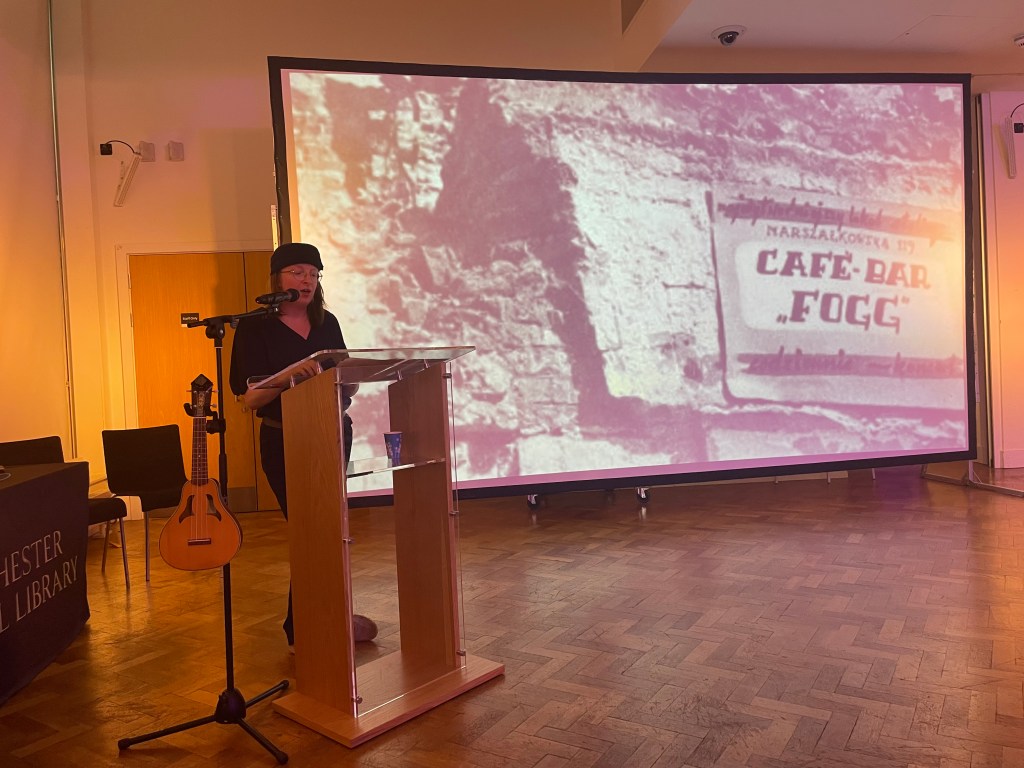
    Take a tour of the legendary Mieczysław Fogg’s life with cultural journalist Juliette Bretan and songs from singer-songwriter Katy Carr Poland’s musical hero Mieczysław Fogg 1930s cabaret to wartime resistance Join us for a unique event celebrating Mieczysław Fogg, Poland’s legendary crooner on the 125th anniversary of his birth. Dive into the vibe of 1930s […]

  • INTERWAR LITERATURE, POLITICS, AND EAST-CENTRAL EUROPE

    Wolfson Room NB02, Basement, IHR, Senate House, Malet Street, London WC1E 7HU

    Though so far under-explored, British authors in the interwar period were frequently fascinated by the reconfiguration of East-central Europe following the war. Inspired by both British intellectual and political support for nationalism, as well as newfound disillusionment in the 1920s with ideas of democracy and nation-states, authors ranging from T.S. Eliot to Evelyn Waugh both […]

  • POLISH ARCHITECTURE: FROM RUINS TO RECONSTRUCTION

    When Poland regained independence in 1918, modern architecture exploded across the newly independent country – the capital, Warsaw, gained its first skyscraper, the Prudential (1933), and clubs with modern technology and revolving dance floors; the coastal fishing village of Gdynia was built up rapidly to become a modernist dream-city; Katowice became a ‘Polish Chicago’ for […]